
 By huda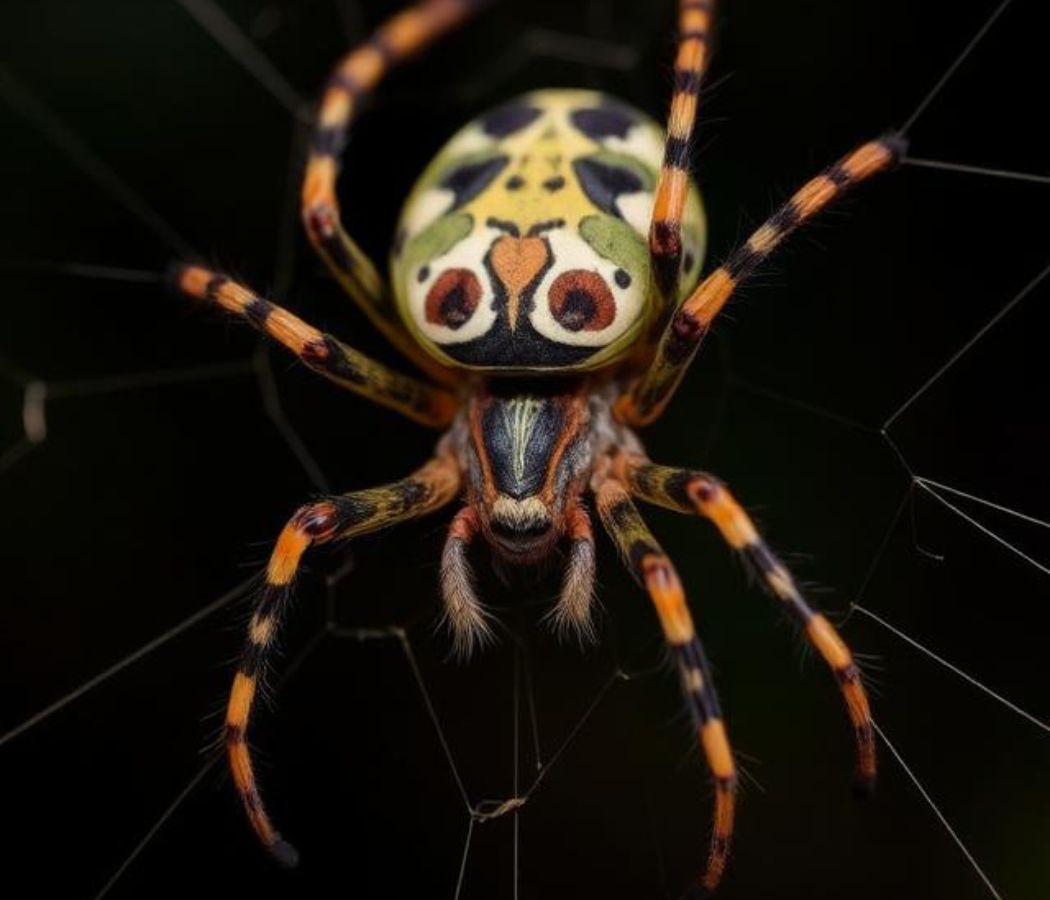
If you search the archives of natural history, you will find a spider that was once believed to have taken to the skies.
Its original scientific name—Attus volans—promised something extraordinary. The word “volans” means “flying” in Latin, and for nearly a century, the story went that this tiny Australian marvel could use specialized flaps on its abdomen to glide through the air. It was a fantastic notion, but one that was eventually proven to be a case of mistaken identity.
Today, the spider formerly known as Attus volans is recognized as the superstar of the jumping spider world for an entirely different, and arguably more spectacular, reason. This is the complete story of a creature that doesn’t fly, but dances better than anything on eight legs.
The Ghost of a Name: Attus volans and Its Complicated Past
To understand this species, we first need to address the name on the tin. Attus volans is not a name you will find in any modern scientific database. So, who was Attus? In the early 19th century, the renowned naturalist Charles Walckenaer decided to lump the vast majority of known jumping spiders under a single, sprawling genus called Attus. For decades, it was a taxonomic catch-all, but as arachnology advanced, the genus Attus was eventually retired, becoming a synonym for the more precise genus Salticus.
When the reverend and arachnologist Octavius Pickard-Cambridge first described this peacock spider in 1874, he gave it a name within that old system, calling it Salticus volans. It would later be moved to Attus before its final, modern relocation. After a brief stop in the genus Saitis in 1901, the spider was finally placed in its correct home in 1991: the genus Maratus, known to the world as the peacock spiders. So, while Attus volans is an evolutionary ghost, it remains the key to unlocking the spider’s most fascinating chapter.
A Fairy-Tale Beast: The Look of Maratus volans
The allure of Maratus volans is almost impossible to overstate, but this beauty comes with a stark gender divide.
-
The Male: A living jewel. The mature male is a tiny masterpiece, reaching an average size of just 4–5 millimeters, smaller than a grain of rice. Against a dark, velvety body, his abdomen explodes with iridescent bands of electric red, deep blue, and vibrant green, all fringed with striking white hairs. This is not just color; it is structural iridescence designed to shatter light and demand attention.
-
The Female & Young: She, in stark contrast, is a master of camouflage. Females and immature spiders of both sexes are a subdued, mottled brown and tan. This extreme difference—a phenomenon called sexual dimorphism—is the engine that drives the male’s incredible behavior.
-
The Key Feature: The male’s abdomen is flanked by two rounded, flap-like extensions (opisthosomal flaps) normally folded flat against his body. In their folded state, he is an unassuming brown jumper. However, these flaps are the key to unlocking the legend of the “flying spider.”
Where the Magic Happens: Habitat and Range
Maratus volans is an Australian endemic, found predominantly along the sun-drenched east coast. Its strongholds are the states of Queensland and New South Wales. The spider is a ground-dweller, preferring open eucalypt forests, heathlands, and scrublands where it can hunt and court amidst the leaf litter and low-lying grasses. Their visual system is highly specialized, allowing them to see the full color spectrum, including ultraviolet light, which they use to find both prey and potential mates.
The Dance of Life: How the “Flying” Myth Was Born
This is where the story of Attus volans gets truly interesting. How did a spider that can’t even get off the ground come to be known as the “flying spider”? The legend started with the man who found it.
In the 1870s, an Australian arachnologist sent specimens of this male spider to England, along with a note containing a remarkable observation. He claimed he saw the spider use its colorful abdominal flaps “as wings or supporters to sustain the length of their leaps, similar to a flying squirrel”. Octavius Pickard-Cambridge believed the account and named the spider “volans.”
This myth of the gliding spider persisted for nearly a century, appearing in scientific texts as late as 1970. But the reality, which we now know, is far more theatrical.
When a receptive female is near, the male puts on one of the most complex courtship displays in the entire animal kingdom. Here is the step-by-step sequence of what actually happens:
-
The Fan: He raises his abdomen vertically and unfurls his two abdominal flaps, locking them into place to create a spectacular, fan-shaped disc of iridescent color. It is a “peacock spider’s” defining moment.
-
The Flag: He raises his third pair of legs, which are tipped with a brush of black and white bristles, and waves them like semaphore flags.
-
The Vibration: As if the visual display were not enough, the male vibrates his abdomen, producing a species-specific, low-frequency drumming sound that the female can feel through the ground with her legs.
-
The Clap: In a final flourish, he will rapidly clap his raised legs together to create an additional percussive sound and motion.
Mealtimes and Danger: Life as a Tiny Hunter
Despite its glamour, M. volans is a voracious ambush predator. Like all jumping spiders, it does not build a web. Instead, it uses its incredible vision to stalk prey, pouncing with lightning speed from a distance. Their diet consists of small arthropods like flies, moths, tiny grasshoppers, and ants.
Danger, however, comes from an unexpected source. If a male’s elaborate overtures fail to impress a female, she will not simply reject him; she will eat him. This high-stakes gamble is the ultimate test of a male’s fitness. After a successful mating, the male quickly moves on to find other potential partners, while the female produces a silken egg sac, guarding her clutch of roughly six eggs ferociously until they hatch.
Bite or No Bite?: The Venom Question
A common question about any spectacular spider is whether it is dangerous. For M. volans, the answer is a definitive no. While the spider possesses venom to subdue its tiny insect prey, its fangs are far too small and weak to puncture human skin. This species is completely harmless and poses zero threat to people or pets.
From Attus volans to Icon
The spider once called Attus volans has had a long journey through the annals of science. From being the victim of a grand taxonomic mix-up to enduring a century as a supposed flying creature, its true identity is finally understood. Today, Maratus volans stands as the jewel of the jumping spiders: a tiny, harmless master of illusion whose dance is a testament to the power of evolution.
It never flew. But when you watch a male peacock spider raise his fan and begin to dance, you realize that the truth is far more breathtaking than any old myth.
Quick Look: Essential Maratus volans Facts
| Category | Details |
|---|---|
| Scientific Name (Original) | Attus volans (now a synonym) |
| Current Name | Maratus volans |
| Size | 4–5 mm (approx. 0.15–0.20 in) |
| Native Region | Eastern Australia (QLD & NSW) |
| Habitat | Open eucalypt forest, scrubland, leaf litter |
| Diet | Small insects (flies, moths, ants) |
| Lifespan | ≈ 1 year |
| Conservation Status | Not Evaluated (Common in range) |
| Danger to Humans | None. Venom is harmless to people. |
Conclusion: More Than a Myth – A Tiny Masterpiece of Evolution
The spider once christened Attus volans—the “flying spider”—never left the ground. That old name, born from a 19th-century observer’s optimistic guess, turned out to be a charming mistake. But in that error lies a far greater truth: Maratus volans, the peacock spider of eastern Australia, does not need wings to inspire awe.
For over a hundred years, science believed these tiny males used their colorful abdominal flaps as gliding aids. Today we know the truth is more dramatic. Those flaps are not wings—they are canvases. Raised and unfurled only during courtship, they become iridescent fans of red, blue, and green, accompanied by semaphoring legs and percussive vibrations. What was once mistaken for flight is actually one of the most elaborate and high-stakes mating rituals in the animal kingdom.
This journey—from the invalid genus Attus to the celebrated genus Maratus—mirrors how our understanding of nature evolves. A misidentified specimen, a fanciful observation, a persistent myth, and finally, patient research revealing the truth. M. volans is not a flying marvel, but a dancing one. And that dance, performed on a stage no larger than a grain of rice, produces a spectacle that rivals any bird of paradise.
So the next time you walk through a eucalyptus forest in Queensland or New South Wales, remember: somewhere in the leaf litter, a male Maratus volans is raising his fan, vibrating his body, and risking his life for a chance to impress a female who holds the power to either mate with him or make him her meal. No wings. No flight. Just evolution’s wild, wonderful, and often deadly sense of showmanship.
The spider that never flew has landed—and it is perfect.
Frequently Asked Questions (FAQs) About Attus volans / Maratus volans
Below are detailed answers to the most common questions readers have about this species, its history, and its behavior.
1. Is Attus volans the same spider as Maratus volans?
Yes. Attus volans is an older, invalid scientific name. In the 19th century, the genus Attus was used as a catch-all for many jumping spiders. When the species was first described in 1874, it was placed there. Modern taxonomy has moved it first to Saitis, then finally to the genus Maratus (the peacock spiders). So Attus volans is a synonym; the correct current name is Maratus volans.
2. Can Maratus volans actually fly?
No. Despite the “volans” (flying) name, the spider cannot fly, glide, or use its abdominal flaps as wings. The original myth came from a 19th-century observer who believed the flaps helped the spider “sustain its leaps.” This was later disproven. The flaps are used exclusively for courtship displays, not locomotion.
3. How big is Maratus volans?
Tiny. Mature males reach only 4 to 5 millimeters (about 0.15 to 0.20 inches) in body length. That is roughly the size of a grain of white rice. Females are similarly sized but lack the bright colors. You could fit several of them on a fingernail.
4. Where can I find Maratus volans in the wild?
This species is endemic to eastern Australia. Its known range includes:
-
Queensland (particularly the southeastern areas)
-
New South Wales (coastal and near-coastal regions)
It prefers open eucalypt forests, heathlands, and scrublands with plenty of leaf litter and low vegetation. It is a ground-dwelling hunter, not a web-weaver.
5. Are peacock spiders dangerous to humans?
Not at all. Maratus volans (and all peacock spiders) are completely harmless to people. They possess venom to subdue tiny insect prey, but:
-
Their fangs are too small and weak to pierce human skin.
-
They are not aggressive; they will flee or display rather than bite.
-
Even if a bite were possible (extremely rare), the venom would cause no more than a mild, localized irritation at worst.
You can safely observe them in the wild or keep them as pets (experienced hobbyists only) without risk.
6. Why do male peacock spiders have such bright colors?
The colors are the result of sexual selection. Females are drab brown, but males have evolved extravagant iridescent patterns (red, blue, green, and white) on their abdominal flaps. These colors are structural – they come from microscopic scales that reflect specific wavelengths of light, including ultraviolet. A male’s color intensity and pattern quality signal his health and genetic fitness to females. A dull or damaged male is less likely to mate.
7. How do they mate? Is it true the female eats the male?
Yes, the mating ritual is dramatic and risky:
-
Approach: The male spots a receptive female and begins a complex dance.
-
Display: He raises his abdomen, unfurls the flaps into a fan, and waves his raised third pair of legs.
-
Vibration: He vibrates his abdomen to send ground-based drumming signals.
-
Mating: If the female is impressed, she will allow him to approach and mate. This takes only a few seconds.
-
Risk: If the female is not impressed or is hungry, she will attack and eat the male (sexual cannibalism). This is why males are so careful and why only the fittest survive to reproduce.
After mating, the male flees quickly. The female later lays around six eggs in a silk sac and guards them fiercely.
8. Do they make webs?
No. Maratus volans is a hunting spider, not a web-builder. Like all jumping spiders (family Salticidae), it uses its exceptional vision to stalk and pounce on prey. It may produce a single silk dragline for safety when jumping, and females make a silk retreat or egg sac, but there is no capture web.
9. What do they eat?
Small arthropods that fit their size. Typical prey includes:
-
Fruit flies and other small flies
-
Tiny moths
-
Springtails
-
Small ants (handled carefully)
-
Other small spiders (including smaller jumping spiders)
They are ambush predators, leaping several body lengths to capture prey with precision.
10. Can I keep Maratus volans as a pet?
In theory, yes – peacock spiders are kept by some invertebrate hobbyists. However, they are not beginner pets. Considerations:
-
They require tiny enclosures (e.g., small acrylic terrariums) with good ventilation.
-
They eat live food (flightless fruit flies, micro-crickets).
-
Males have very short lifespans (roughly one year total; mature males last only a few months).
-
Females live slightly longer but are dull-colored and less interesting to observe.
-
Legality: You must ensure the spider was captive-bred, not wild-caught, and that export/import laws are respected (Australia strictly controls export of native wildlife). Most enthusiasts outside Australia cannot legally obtain them.
For most people, the best way to enjoy Maratus volans is through high-quality macro photography and videos online.
11. Why is it sometimes called a “peacock spider”?
The common name “peacock spider” refers to the male’s fan-like abdominal display, which resembles the tail fan of a peacock bird. The analogy is strong: both use iridescent, expandable fans to attract mates. The name was popularized in the early 2000s as more Maratus species were discovered and filmed.
12. Is Maratus volans endangered?
No. It has not been formally evaluated by the IUCN (International Union for Conservation of Nature), but it is considered common within its range in eastern Australia. Habitat loss from land clearing could pose a local threat, but the species is not currently listed as threatened. However, many peacock spiders are range-restricted and sensitive to environmental changes.
13. What is the lifespan of Maratus volans?
Approximately one year, typical of small jumping spiders. They hatch from eggs in spring, grow through several molts over summer, mature by autumn, mate, and then die (males often soon after mating; females die after guarding the egg sac). In captivity, with ideal conditions, they might live a few months longer.
14. Can they see in color?
Yes – and better than most spiders. Jumping spiders (Salticidae) possess exceptional vision, with four pairs of eyes arranged for acute depth perception and color discrimination. Maratus volans can see:
-
The full visible light spectrum (red, green, blue)
-
Ultraviolet (UV) light – their own body patterns reflect UV, which humans cannot see
This UV component is likely important in courtship, as females may perceive patterns invisible to us. Their vision rivals that of many insects and small vertebrates.
15. How do scientists study such small spiders?
With specialized tools:
-
Macro photography and videography (lenses that magnify 3–10x)
-
Scanning electron microscopes (SEM) to study structural color
-
Vibration playback experiments to test female responses to male drumming
-
Behavioral arenas in labs where spiders are filmed from above and side
Peacock spiders have become internet celebrities largely because of stunning macro videos (e.g., by Jurgen Otto), which revealed their dances to the world.
16. Will I ever see one in my garden if I live in Australia?
Possibly, if you live in the right region (QLD/NSW) near natural bushland. They are not typically found in manicured city gardens because they rely on leaf litter and native plants. To spot one:
-
Look on sunny days on the ground or low vegetation.
-
Watch for a tiny spider that moves in short, jerky jumps.
-
Males are easiest to spot in late summer/autumn during mating season.
-
Use a magnifying glass or macro lens – they are smaller than a pencil eraser.
Even if you don’t see M. volans, you might encounter other Maratus species – there are over 100 described peacock spiders in Australia, and new ones are discovered regularly.